Strategy Postflop
Blockers: Bluffing With the Nut Card
August 20, 2026 · 5 min read
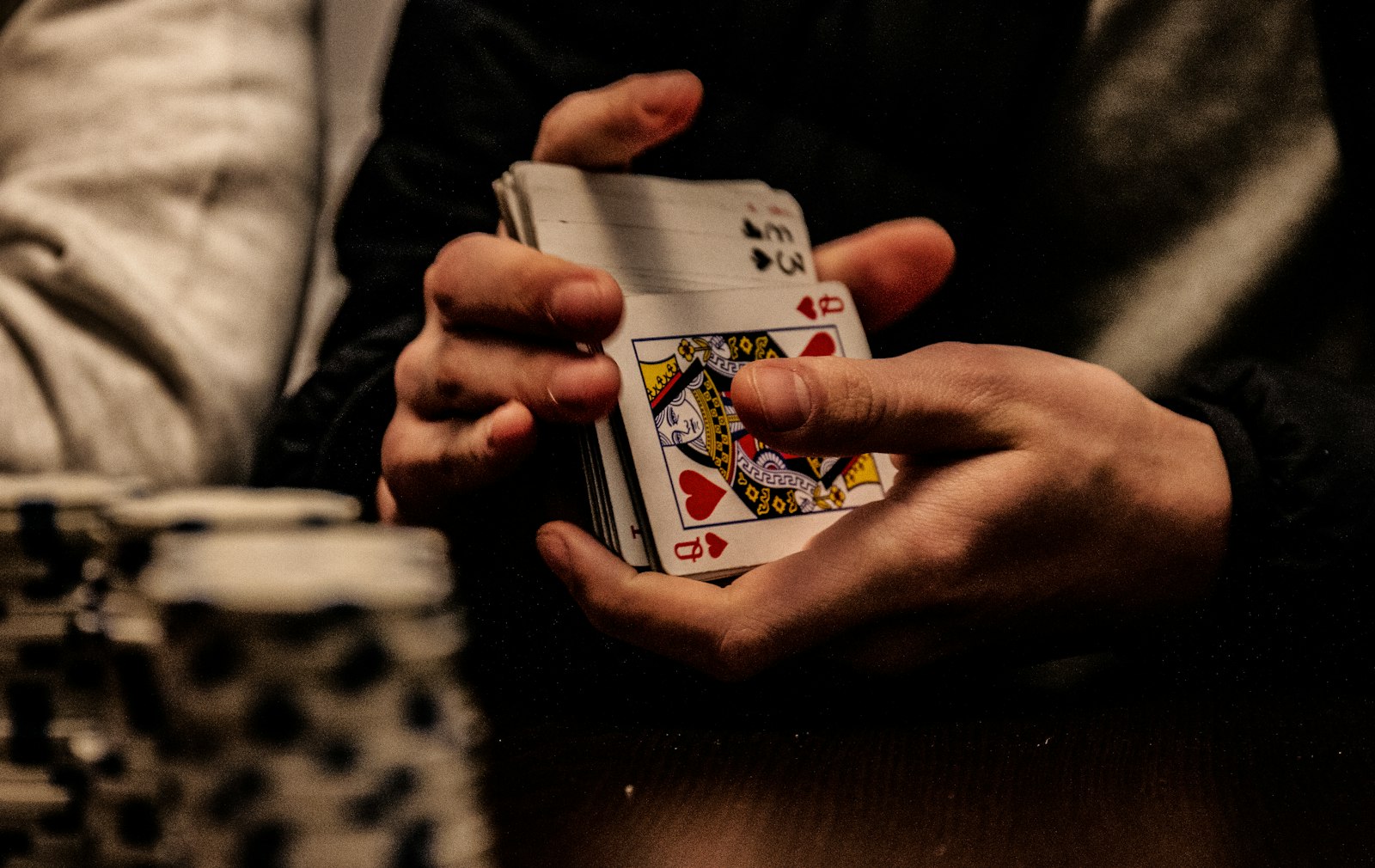
Late in a PLO hand, the third spade lands on the river. You hold the ace of spades — and nothing else. Your actual hand is a busted wrap, pure air at showdown. And yet, in this moment, that single card makes you the best bluffer at the table: the one hand your opponent fears most, the ace-high flush, is a hand you know they cannot have. Betting pot here isn't a wild stab. It's a calculated application of the strongest recurring blocker spot in poker.
Blockers — cards in your hand that remove combinations from your opponent's range — exist in every poker variant. PLO supercharges them for a simple structural reason: everyone holds four cards, so every card you hold intersects twice as much of each opponent's range as it would in Hold'em. In a game where big pots revolve around the nuts, holding the card that makes the nuts is information nothing else provides.
The nut-flush blocker: the flagship play
The bare A♠ on a three-spade board is the classic because every part of it cooperates:
- It removes the hand you fear. No opponent holds the nut flush, period. The best they can hold is the king-high flush — a hand that feels awful against your pot-sized river bet.
- It threatens the hand you represent. From your opponent's seat, a big river bet on a flush board is the nut flush until proven otherwise, and you hold the one card most consistent with that story.
- It arrives with the right hands. You reach rivers with a bare A♠ precisely when your nut-flush draw came attached to something else — a wrap, a pair — that bricked. Your bluffing range materializes naturally out of your best draws.
Execution notes that separate the play from the meme: bluff the rivers where your opponent's line caps their hand (check-check, or bet-call then check), size at or near pot — you're representing the nuts, so bet like it — and prefer opponents capable of folding a queen-high flush. Which brings up the play's mirror image: when you face the pot-sized river bet holding the king-high flush, remember that every competent opponent knows this play too. The K♠ in your hand blocks their semi-strong flushes and makes a bluff relatively more likely — this is why king-high flushes are among the hardest bluff-catching decisions in PLO, and why keeping the betting lead yourself is worth so much.
The supporting cast of blockers
Straight blockers. On a board of 9-8-7, an opponent needs J-T or T-6 (or 6-5) for a straight. Holding a jack and a ten yourself removes a large slice of the J-T combinations — the nut straight — from their range. Straight blockers power turn and river bluffs on run-out boards and, defensively, they upgrade your bluff-catchers: calling with a set on a straight board is materially better when your side cards block the straights that beat you.
Paired-board blockers. On K-K-4, holding a king doesn't just give you trips — not holding one, while holding 4-4's neighbors, shapes how credible anyone's full-house line is. More practically: when you hold A-K-x-x on that board, you block the strongest trips-plus-kicker hands and can pressure the pocket-pair hands that make up the rest of a calling range.
Set blockers preflop. Holding two aces doesn't only give you the best pair — it makes it impossible for anyone else to have aces and halves the deck's remaining set-making aces. This is partly why four-bet pots are so legible in PLO: the aces in your own hand are the strongest possible evidence about what your opponent's four-bet does not contain.
Wrap-out blockers. Subtler but real: when you hold cards that would complete your opponent's obvious wrap — the sixes and jacks around a 9-8-x board — their aggressive draws have fewer live outs against you, which shifts close stack-off decisions toward calling.
Where blocker logic breaks
Blockers are range-modifiers, not magic, and three failure modes cost players real money:
1. Blockers don't beat calling stations. The A♠ bluff works by making a good player's king-high flush an unprofitable call. Against an opponent who was calling with two pair regardless, your blocker is trivia. At loose low-stakes tables, blocker bluffs should shrink toward zero and blocker-informed value decisions do the earning instead — bet thinner when your cards block the hands that beat you.
2. A blocker is not equity. Holding the A♠ on the turn with no pair and no draw is still air that must fire multiple barrels to win. The blocker tells you your bluff has an unusually high success rate — it doesn't make bluffing mandatory. Pick spots where the story you're telling (flush draws got there, your line matches) holds up independently.
3. One blocker among four cards cuts both ways. Your four cards intersect their range more — but theirs intersect yours more too. Ranges in PLO are so wide that removing even a nut combination still leaves opponents with plenty of strong hands. Blockers shift probabilities by meaningful but not overwhelming margins; treat them as the tiebreaker in close decisions, not the headline.
Making it practical
A habit worth building: on every river where serious money might move, take five seconds to ask two questions. What is the nuts, and do I block it? — that answers whether you can credibly attack. What do they think I'm afraid of, and do they know I could block it? — that answers whether you're about to be attacked. Most PLO players never ask either question; the ones who do get to make pot-sized bets with ace-high and correct folds with flushes, and to the rest of the table both plays look like witchcraft.
They're not. They're the logical endpoint of the idea running through this whole site: PLO's big pots concentrate around the nuts — so the cards that control who can have the nuts are among the most valuable cards in the deck, even when they make no hand at all. For the foundation underneath this article, read nut potential first; for the equity side of close decisions, the equity calculator will show you exactly how much a blocker shifts a matchup.